La langue serbe / croate / bosniaque / monténégrin
Elle peut apparaître sous l’un ou l’autre de ces noms, ou sous son ancien nom de serbo-croate
Quoi qu’il en soit, il s’agit d’une langue pluricentrique parlée dans quatre pays des Balkans
Elle a de nombreuses particularités et autant de raisons de l’apprendre !
Mon enseignement repose sur principes fondamentaux
AjustementAdapter les cours aux besoins et aux souhaits des étudiants
Application
Rendre les leçons fonctionnelles dans la vie quotidienne
Création
Tous le matériel est conçu et fourni gratuitement par l’enseignant
Connaissez-vous votre niveau ?
Débutant
Si vous étuidez le serbo-croate pour la première fois, ce type de cours pourrait vous convenir
Intermédiaire
Si vous avez déjà de l’expérience dans l’apprentissage de la langue, envisagez les leçons de niveau intermédiaire
Advancé
Si vous vous sentez à l’aise pour communiquer, mais que vous souhaitez améliorer cetraines compétences, vous êtes probablement un apprenant advancé
La première leçon est gratuite !
À partir de la deuxième leçon, les prix suivants s’appliquent
50min - 20$
120min - 40$
Des prix dégressifs et des réductions sont disponible : N’hésitez pas à me contacter.

-
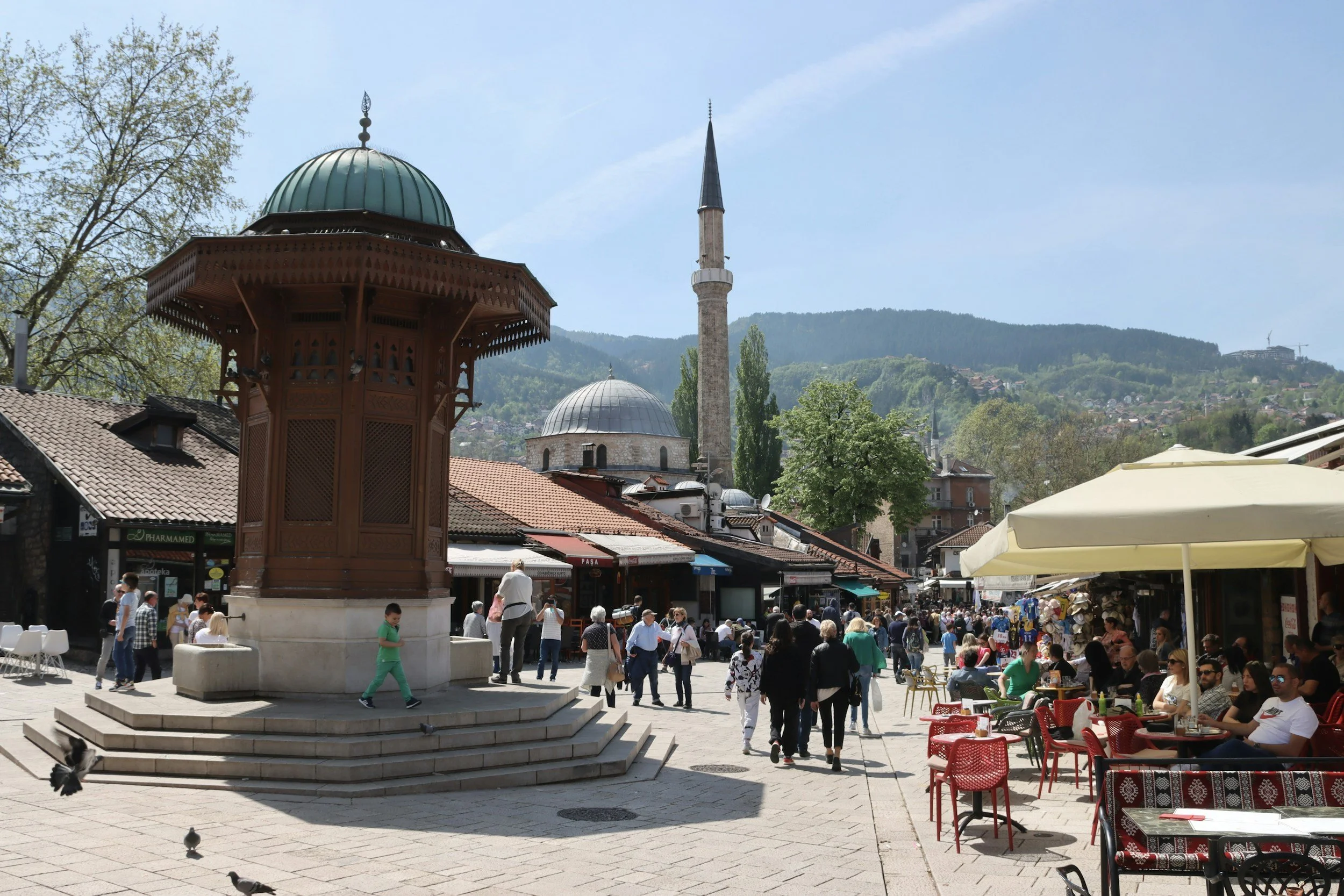
Bosnie-Herzégovine est un pays difficile à décrire en mots et en images. Abritant de nombreuses nations et religions, ce petit pays capture et vie une multitude d’héritages de ses habitants actuels et passés.
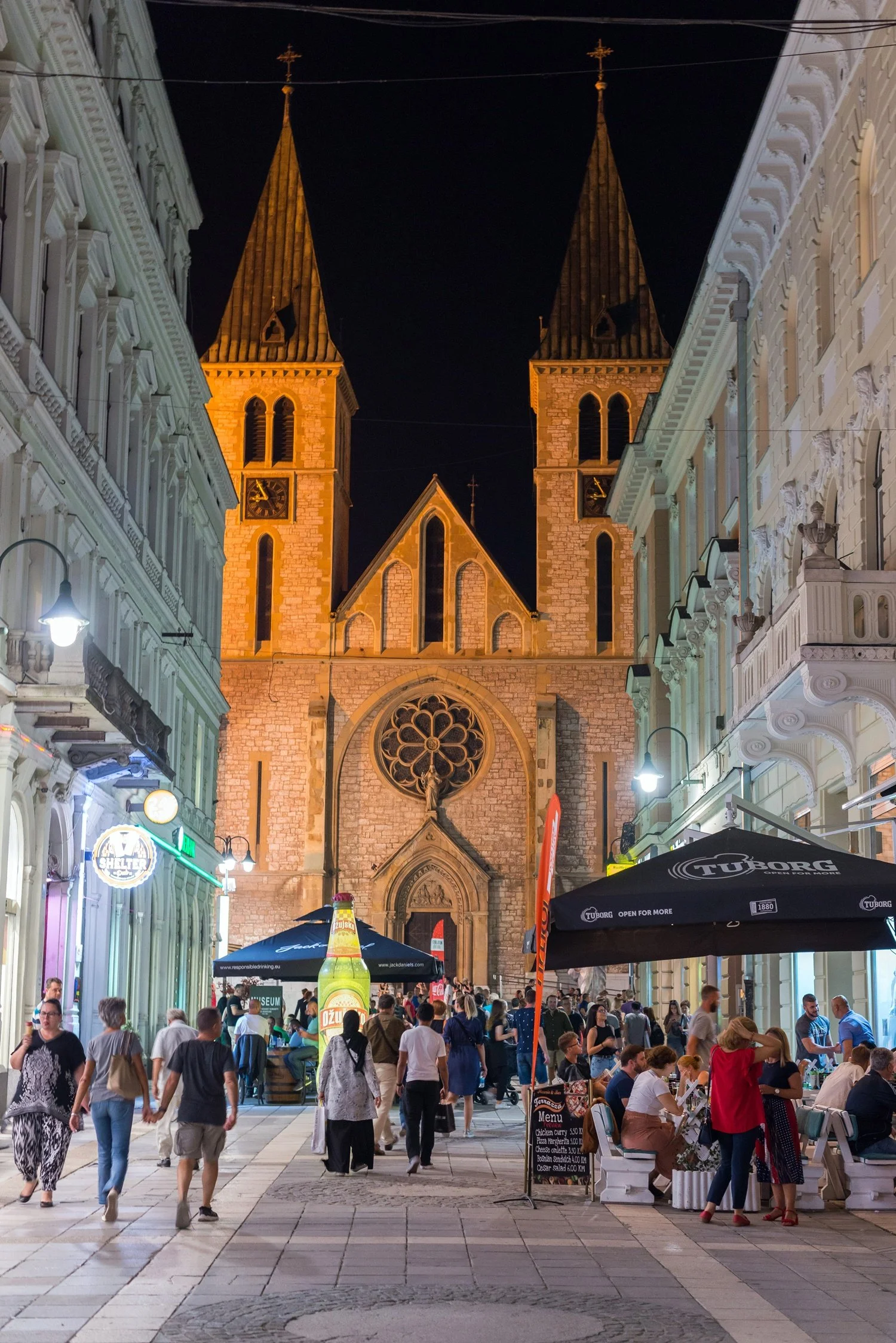
La capitale, Sarajevo, est la seule capitale européenne où l’on trouve des temples musulmans, chrétiens (catholique et orthodoxes) et juifs dans la rue principales. La Vieille ville, construite à l’époque ottomane, vous fera déambuler dans un bazar souterrain, boire un café bosnien dans un service de cuivre et déguster des sucreries et des plats orientaux. Le Centre-ville, construit sous la domination austro-hongroise, avec son aspect d’Europe centrale, montre un autre chaptre de l’histoire de Sarajevo. Le Nouveau Sarajevo, construit pendant le Yugoslavie socialiste, est célèbre pour sa architecture brutaliste. Pendant votre séjour, arretez-vous pour visiter le Musée national et le café Tito.
Juste à l’extérieur de la ville se trouvent les monts Bjelašnica et Jahorina, où se sont déroulé les Jeux Olympiques d’hiver de1984 qui ont donné à la ville sa mascotte - le loup Vučko.
Learn more!
〰️
〰️
Learn more! 〰️ 〰️
Saviez-vous comment la religion a influencé la langue bosniaque ?
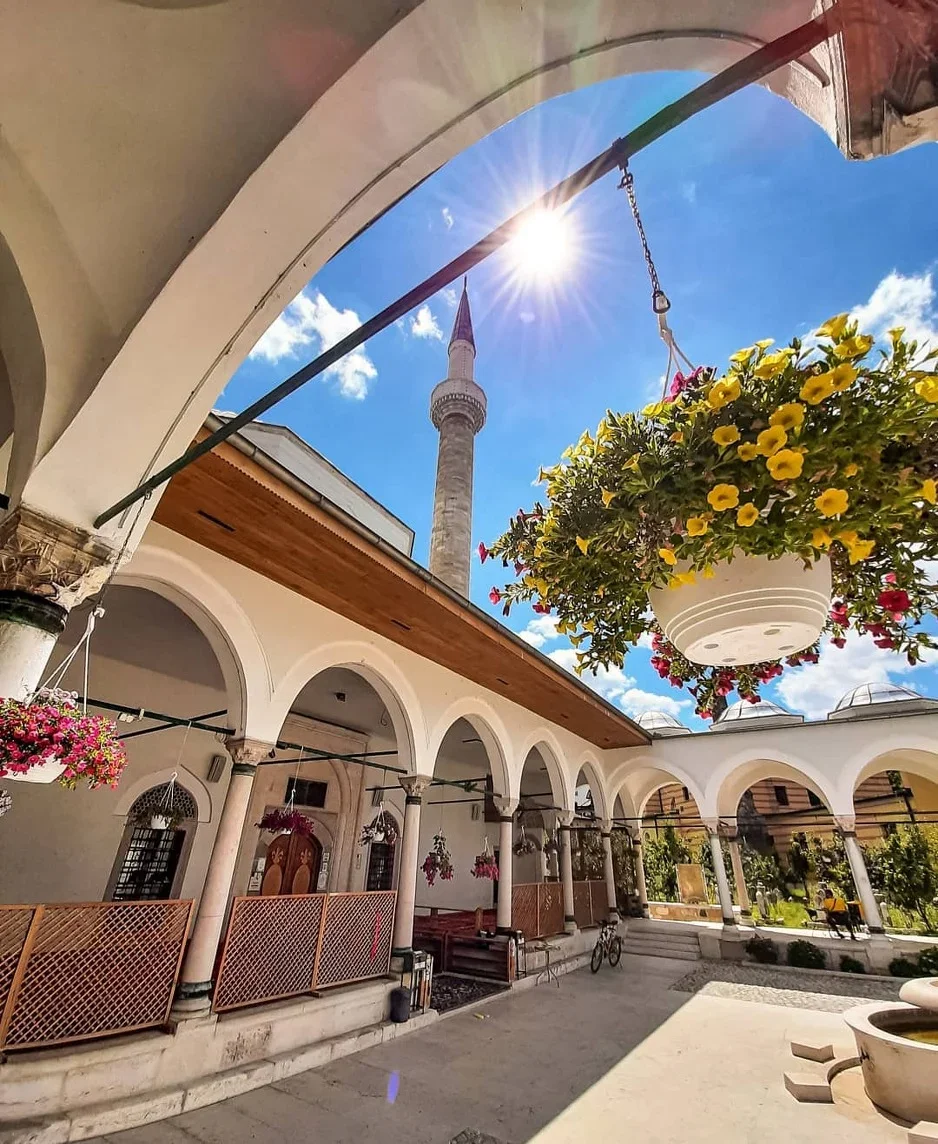
Environ la moitié de la population de la Bosnie-Herzégovine est musulmane. Depuis l’époque ottomane, l’islam a joué un rôle important dans la vie du pays. Les Bosniaques (musulmans de Bosnie) sont la seule nation slave musulmane, et donc le seul peuple slave dont la langue a intégré des termes arabes pour décrire la vie religieuse. La connaisance de ces mots peut nous aider à mieux comprendre la richesse du patrimoine littéraire en Bosnie-Herzégovine, ainsi que dans d’autres communautés musulmanes des Balkans, et les particularités de la vie quotidienne.
Parmi les exemples de ces mots figurent Allah, džennet (paradis), džehennem (enfer), dženaza (funérailles), edžel (moment de la mort), ainsi que les expressions telles que selam (Sala’am), Maša’Allah, Inša’Allah, Bajram Mubarek.
De nomnreux autres mots d’origine arabic et turkque peuvent être entendus en Bosnie, bien que certains soient devenus archaïques : ahbab (ami), imanet (confiance), ašik (cher), aferim (bravo), rahatluk (joie).

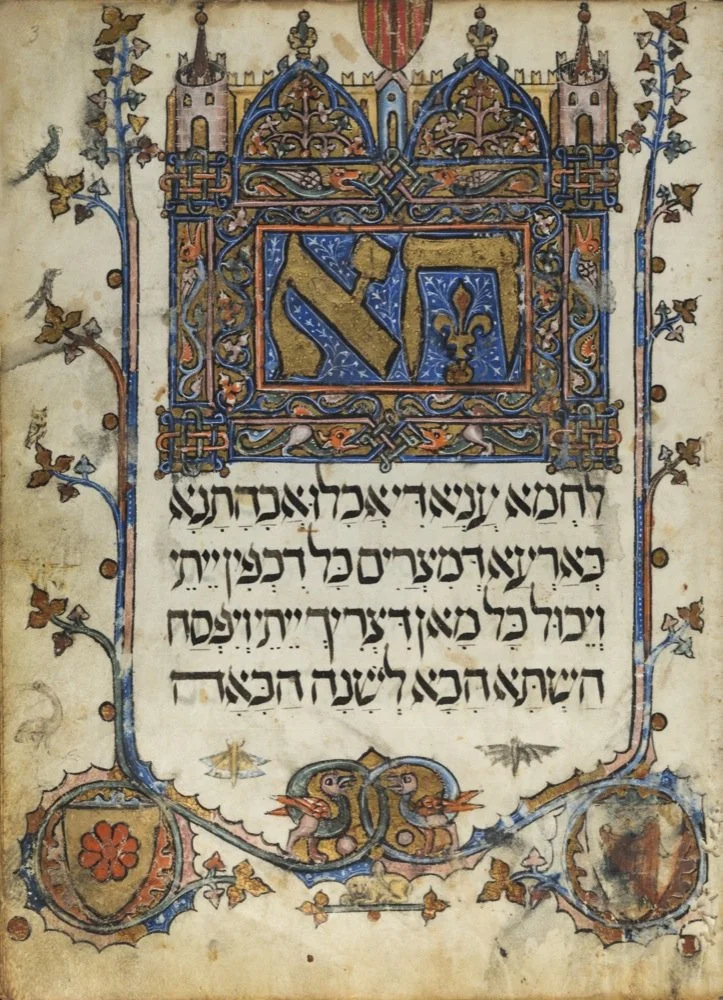
Avez-vous entendu parler de la Haggadah de Sarajevo ?
La Haggadah (histoire en hébreu) de Sarajevo est un joyau de le tradition hébraïque médiévale. Elle appartient à l’art sépharade enluminé et décorative. Son histoire a été extrêment mouvementée. On suppose qu’elle a éré créée Barcelone vers 1350. Le livre a quitté l’Espagne après l’expulsion des Juifs au XVe siècle et sa trajectoir est inconnue. Il est resté dans le nord d’Italie qux XVIe et XVIIe siècles et est qrrivé en Bosnie dans les circonstances inconnues, où il a été retrouvé par le Musée national à Sarajevo qui l’a acheté en 1894. Il est inscrit au patrimoin de l’UNESCO.
La Haggadah contient 69 miniatures enluminées montrant la création du monde, l’esclavage en Égypte, lasortie d’Égypte sous la conduite de Moïse, et au-delà, jusqu’à la succession de Josué, fils de Noun. La dernière partie du livre contient certains des plus célèbres poètes hébreux de l’age d’or de la littérature hébraïque (Xe - XIIIe siècle).
Aujourd’hui, on peut la voir au Musée national de Bosnie-Hérzegovine.
Il y a beacoup des mots étrangers !
La région des Balkans est un carrefour des cultures. Des nombreuses cultures l’habitent, et bien d’autres encore l’ont habitée. Leur coexistence, leur passage et leur séjour sont évoqués par une multitude de mots d’origines diverses. Quelles que soitent les langues que vous parlez, cela vous aidera à apprendre le serbo-croate.
Turc
džezva (cezve), jastuk (yastık), čaršav (çarşaf), pamuk, čarapa (çorap), čelik (çelik), jogurt (yoğurt), dućan (dükkân), šećer (şeker), torba
Grec
period (περίοδος), helikopter (ελικόπτερο), demokratija (δημοϰρατία), energija (ενέργεια), biblioteka (βιβλιοθήκη), anđeo (aγγελος), ikona (εἰκών), harmonija (αρμονία), komedija (κωμωδία), tragedija (τραγωδία)
Hongrois
vašar (vásár), mačka (macska), gulaš (gulyás), varoš (város), soba (szoba), bunda, čizma (csizma), cipela (cipellő), hajduk (hajdu), lopov (lopó)
Français
ešarpa (echarpe), plafon (plafond), liker (liquer), žargon (jargon), volan (volant), garderoba (garde-robe), roman, žurnal (journal), butik (boutique), silueta (silhouette)
Anglais
internet, kompjuter (computer), sajt (site), vikend (weekend), miting (meeting), event, šoping (shopping), derbi (derby), fudbal (football), bekstejdž (backstage)
Allemand
flaša (Flasche), knedla (Knödel), šank (Schank), farba, (Farbe), šnajder (Schneider), gepek (Gepäk), šnicla (Schnitzel), kugla (Kugel), princ (Prinz), štimung (Stimmung)